
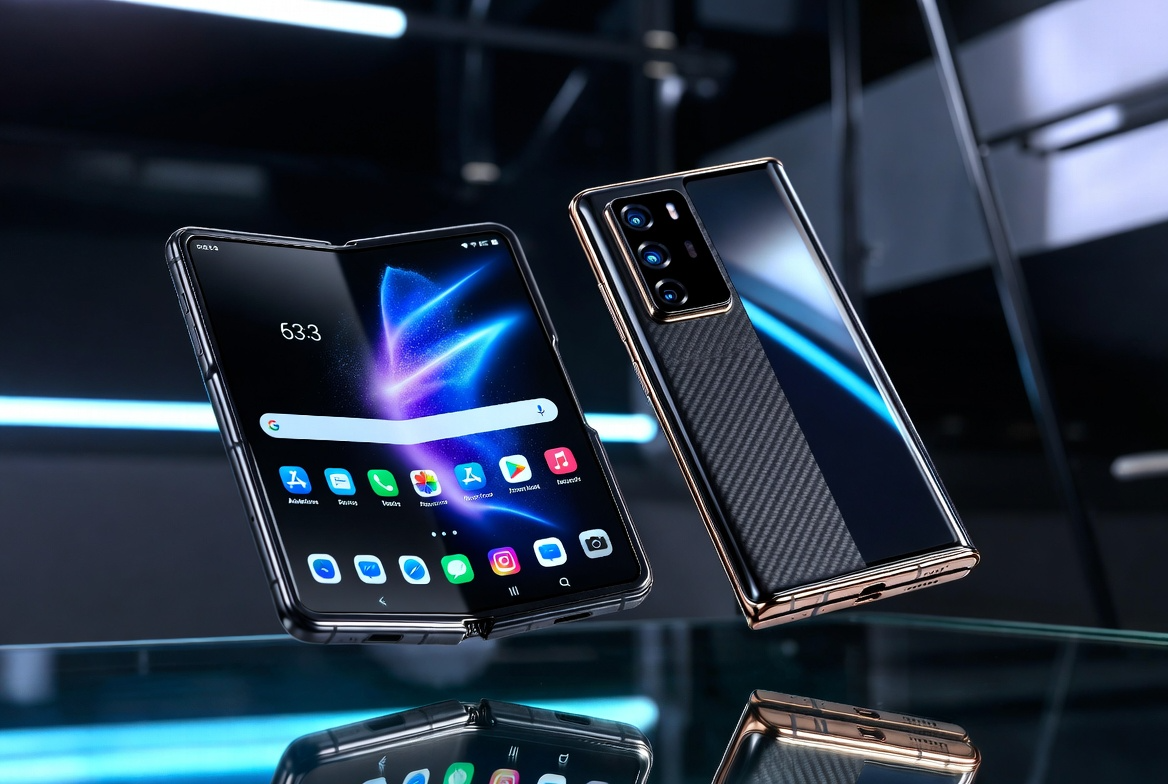
Samsung Galaxy Z TriFold vs Huawei Mate XT Ultimate: The Future of Trifold Foldable Phones
Smartphone
The Future of Trifold Foldable Phones: Samsung Galaxy Z TriFold vs. Huawei Mate XT Ultimate
The next generation of foldable smartphones, known as trifold phones, is represented by Samsung’s Galaxy Z TriFold and Huawei’s Mate XT Ultimate. Although both devices have dual hinges and three-panel displays, their folding processes, practical applications, and general philosophies differ significantly.
With the Mate XT Ultimate, which debuted last year and went on sale worldwide in February 2025, Huawei became the first manufacturer to release a trifold smartphone
. Despite folding only twice, its massive 10.2-inch flexible display is divided into three sections, earning it the “trifold” name.
After months of using the Mate XT, it initially made Samsung’s trifold approach seem less appealing when the Galaxy Z TriFold was first shown at the APEC CEO Summit. But hands-on time with Samsung’s device in Dubai completely changed that perception.
With foldable phone shipments expected to grow 30% year over year in 2026, according to IDC, both Samsung and Huawei are racing to define what the future of premium smartphones looks like.
Z Shape vs. U Shape Trifold Design Philosophy
Despite being in the trifold category, these phones have very different folding designs.
Huawei Mate XT Ultimate: Unmatched Z-Fold Adaptability
Three different usage modes are made possible by the Mate XT’s single flexible OLED panel, which folds into a Z shape:
Phone mode (completely folded)
One fold open in mini-tablet mode
Completely unfolded tablet mode
It is among the most adaptable smartphones ever made thanks to this design. In particular, the mini-tablet mode adds everyday usefulness that is currently unmatched by any other foldable.
Tablet-First Experience with the Samsung Galaxy Z TriFold
With both hinges moving in the same way, Samsung’s Z TriFold folds inward into a U shape. This restricts use to::
Phone mode (completely folded)
Tablet mode (completely unfolded)
The lack of a workable middle configuration, in contrast to Huawei’s strategy, supports Samsung’s emphasis on transforming a tablet into a pocketable phone as opposed to a three-in-one gadget.
Hinge Design and Construction QualitySamsung uses three panels of differing thicknesses and two different hinge sizes, drawing on years of folding experience. One hinge is tighter, while the wider hinge springs open at a specific angle. A secondary rear display allows basic phone use when fully closed.
Huawei’s Mate XT uses curved sides and a continuous display, enabling partial unfolding for instant mini-tablet functionality. However, this also means part of the display remains exposed when folded, making it less protected — though Huawei includes a protective case to compensate.
Durability, Creases and Materials
Both trifold phones minimize screen creases, but Samsung’s hinge engineering results in smoother transitions when running a finger across the folds. Huawei’s creases are deeper but rarely noticeable during daily use.
In terms of materials:
Huawei Mate XT feels more premium thanks to faux leather, gold accents and curved edges.
Samsung Galaxy Z TriFold opts for a carbon-fiber finish that prioritizes durability over luxury.
Size, Weight and Thickness Comparison
Huawei Mate XT
3.6mm unfolded
12.8mm folded
298g weight
Samsung Galaxy Z TriFold
3.9mm unfolded
12.9mm folded
309g weight
Huawei’s device is slimmer and lighter, while Samsung’s feels more solid in hand.
Water and Dust Resistance
Huawei Mate XT: IPX8 (water resistant)
Samsung Galaxy Z TriFold: IP48 (limited dust + water resistance)
Neither phone is completely dust-proof, but both can handle water exposure similar to flagship smartphones.
Display Technology Comparison
Samsung Galaxy Z TriFold Displays
6.5-inch AMOLED cover display
120Hz variable refresh rate
422ppi pixel density
10-inch internal AMOLED
120Hz adaptive refresh rate
269ppi pixel density
Huawei Mate XT Display
Single 10.2-inch OLED panel
90Hz refresh rate
382ppi pixel density
Converts into:
6.4-inch phone
7.9-inch mini-tablet
10.2-inch tablet
Huawei’s wider aspect ratio results in less letterboxing for videos, while Samsung’s display excels at multitasking with three apps side-by-side.
Performance, Software and Updates
Samsung equips the Z TriFold with the Snapdragon 8 Elite for Galaxy, paired with:
16GB RAM
512GB or 1TB storage
One UI 8 based on Android 16
Seven years of OS and security updates
Huawei’s Mate XT runs on:
Kirin 9010 chipset
16GB RAM
512GB or 1TB storage
EMUI 14.2 (no Google apps by default)
While workarounds exist for Google services, Samsung delivers a smoother and more familiar Android experience.
Battery and Charging
Both phones pack a 5,600mAh battery.
Huawei Mate XT
66W wired charging
50–55W wireless charging
Samsung Galaxy Z TriFold
45W wired charging
Qi wireless charging
Huawei charges faster, while Samsung focuses on ecosystem compatibility.
Why Thin Phones Are Fueling Foldable Innovation
Ultra-thin phones like the iPhone Air and Galaxy S25 Edge have drawn crowds but modest sales. However, these slim designs are paving the way for better foldables by reducing bulk and improving portability.
Samsung’s Galaxy Z Fold 7 demonstrated that foldables no longer need to feel like two phones stacked together — a trend that continues with the Z TriFold.
Foldable Phone Market Outlook 2025–2026
IDC predicts:
10% foldable growth in 2025
30% growth in 2026
Apple is expected to play a major role with its rumored foldable iPhone, potentially generating up to 10% of Apple’s total smartphone revenue.
Apple Foldable iPhone: Crease-Free but Costly
Reports suggest Apple is developing a crease-free foldable iPhone using liquid metal hinges and Samsung Display panels. Expected pricing ranges from $1,800 to $2,400, making it the most expensive foldable phone ever.
Final Verdict: Which Trifold Phone Is Better?a
Choose Huawei Mate XT Ultimate if you want:
Maximum versatility
Mini-tablet mode
Premium design
Choose Samsung Galaxy Z TriFold if you want:
Strong software support
Better multitasking
Long-term updates and ecosystem integration
Both phones highlight how foldables are no longer experiments — they’re shaping the future of smartphones.